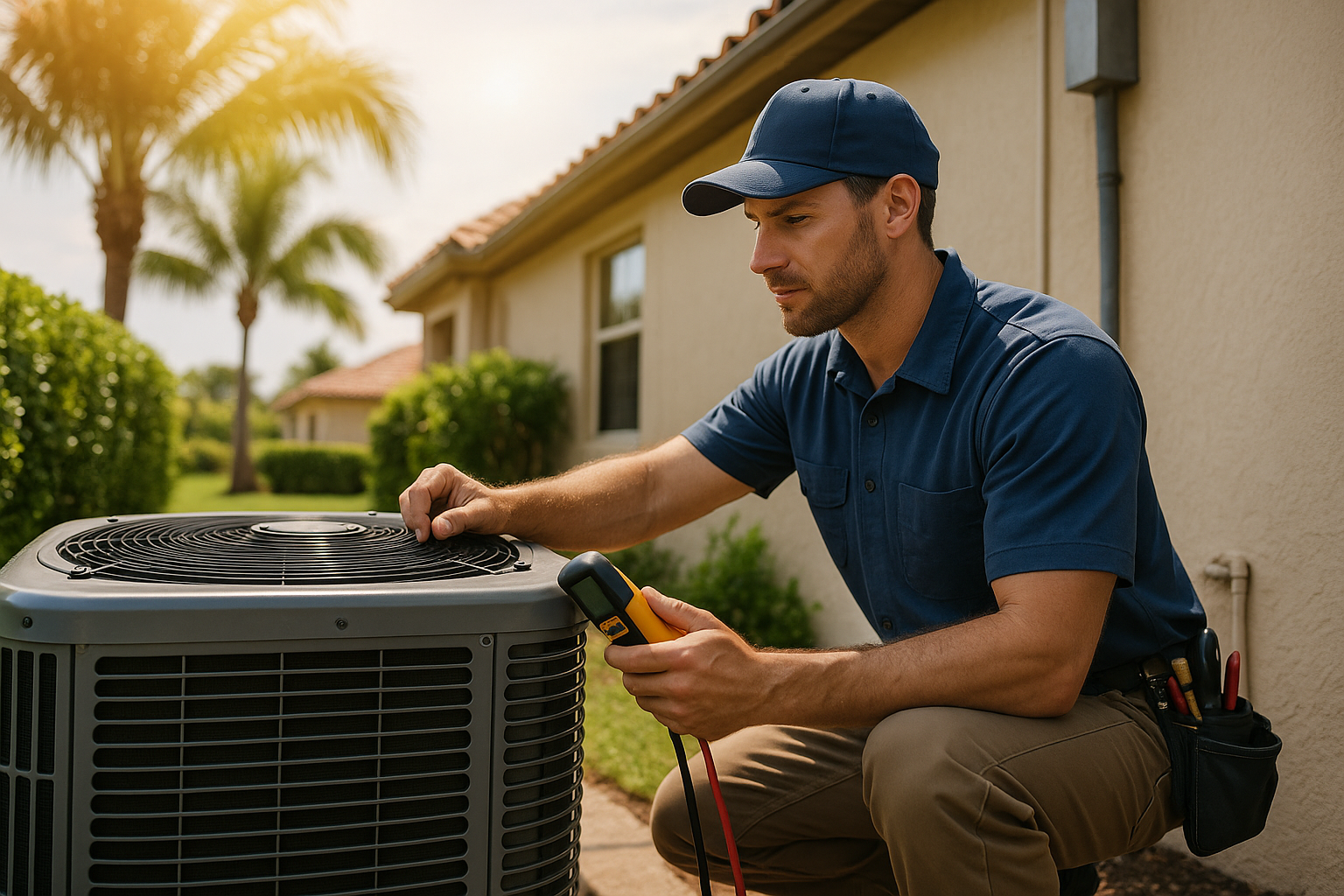
Why Does My Air Conditioner Struggle When Heat Index Exceeds 100 Degrees?
When the heat index climbs above 100°F in Naples, your air conditioner struggles because it's working against extreme humidity and temperature loads that exceed its design capacity. The combination of high ambient temperatures and moisture creates a perfect storm that forces your AC system to work harder than intended.
Understanding Heat Index vs. Actual Temperature
The heat index combines air temperature with relative humidity to show how hot it actually feels. In Naples, summer highs reach 90-92°F, but with humidity levels consistently above 70%, the heat index frequently exceeds 100°F from June through September. This means your air conditioner isn't just fighting the actual temperature—it's battling the combined effect of heat and moisture.
When humidity is high, your AC must work double duty. It needs to remove moisture from the air while simultaneously cooling it. This dual process requires significantly more energy and puts tremendous strain on your system's components.
How Extreme Heat Index Affects AC Performance
Several factors cause your air conditioner struggles during extreme heat index conditions. First, the condenser unit outside works less efficiently when ambient temperatures soar. The refrigerant can't release heat as effectively, forcing the compressor to work harder and longer cycles.
Second, high humidity means your evaporator coil spends more time removing moisture, leaving less capacity for actual cooling. This is particularly challenging in neighborhoods like Pelican Bay and Park Shore, where proximity to water increases ambient humidity levels.
Third, extreme conditions cause your system to run continuously without reaching the set temperature, leading to increased wear and higher energy bills.
Signs Your AC Is Struggling With Heat Index
Watch for these warning signs that indicate your air conditioner struggles with extreme heat conditions:
- System runs constantly without reaching desired temperature
- Indoor humidity levels above 60%
- Ice formation on evaporator coils
- Unusual noises from the outdoor unit
- Dramatically increased energy bills
- Uneven cooling throughout your home
Solutions to Help Your AC Handle Extreme Heat
While you can't control Naples' challenging climate, you can take steps to reduce the burden on your air conditioning system. Start by ensuring proper insulation and sealing air leaks that force your AC to work harder.
Consider upgrading to a variable-speed system that can adjust its output based on conditions. These units handle extreme heat index situations more efficiently than single-stage systems.
Regular maintenance becomes critical during extreme weather. Clean or replace filters monthly during peak season, ensure outdoor units have adequate clearance, and schedule professional tune-ups before the hottest months arrive.
When to Call Professional Help
If your air conditioner struggles consistently when the heat index exceeds 100°F, it may be undersized for your home or suffering from efficiency issues. Professional HVAC technicians can assess whether your system has adequate capacity for Naples' extreme conditions.
Sometimes the solution involves adding supplemental cooling, upgrading ductwork, or installing a larger system. In severe cases, a complete system replacement may be necessary to handle the demanding climate effectively.
Don't wait until your system fails completely. Addressing performance issues early can prevent costly emergency repairs during the hottest days when HVAC services are in highest demand.
Frequently Asked Questions
- Is it normal for AC to struggle when heat index hits 100°F?
- Yes, it's common for air conditioners to struggle when heat index exceeds 100°F, especially in humid climates like Naples where systems work harder to remove moisture.
- How can I help my AC during extreme heat index conditions?
- Keep blinds closed, change filters monthly, ensure outdoor unit clearance, set thermostat reasonably, and avoid using heat-generating appliances during peak hours.
- Should I lower my thermostat when my AC struggles with heat?
- No, lowering the thermostat when your AC struggles will only make it work harder. Instead, focus on reducing heat load through insulation and shade.
- When should I replace an AC that struggles in extreme heat?
- Consider replacement if your system is over 10 years old, requires frequent repairs, or consistently fails to maintain comfort during normal extreme weather conditions.
- Can high humidity cause my AC to struggle more than temperature alone?
- Yes, high humidity forces your AC to work harder removing moisture while cooling, which is why heat index is more challenging than temperature alone.
About the author: Matt Fowkes, Founder. Matt Fowkes founded the operator to connect homeowners with vetted local service professionals. He's spent over a decade studying how online directories and matching services work — what makes them trustworthy, what makes them fast, and why most fail homeowners.
More hvac guides for Naples
Need hvac help in Naples?
Get matched with a vetted local pro — free, no obligation.